






8 Hours
30
1 Year
Arranged location
The Islamic Cairo Full Day Tour is one of the most enriching and culturally immersive experiences you can enjoy in Egypt’s vibrant capital. This tour is designed for travelers who want to explore beyond the pyramids and dive deep into the spiritual, historical, and architectural legacy that defines Cairo as one of the greatest Islamic cities in the world.
Cairo is not just a city—it is a living museum of Islamic civilization. From towering minarets to intricately decorated mosques, every corner tells a story of faith, power, art, and resilience. Through this carefully crafted Cairo Islamic tour, you will discover some of the most iconic monuments that shaped the city over centuries.
Your journey begins with a comfortable pick-up from your hotel in a private, air-conditioned vehicle. Accompanied by a professional Egyptologist guide, you will explore the most important Islamic Cairo attractions, including the legendary Saladin Citadel, the stunning Mosque of Muhammad Ali, the majestic Sultan Hassan Mosque, and the elegant Al-Rifa’i Mosque.
This full-day experience is more than just sightseeing—it is a deep dive into the heart of Islamic heritage. You will learn about the rulers who built Cairo, the architectural innovations that defined different eras, and the cultural traditions that continue to thrive today.
Whether you are visiting Egypt for the first time or returning to explore more, this Islamic Cairo day tour is an essential part of your journey.
Tour Highlights
Top Islamic Cairo Attractions
Explore the historic Saladin Citadel
Visit the iconic Mosque of Muhammad Ali
Discover the grandeur of Sultan Hassan Mosque
Admire the beauty of Al-Rifa’i Mosque
Enjoy a private guided Cairo Islamic sites tour
Experience authentic Egyptian culture and local life
Taste traditional Egyptian cuisine during lunch
Why Choose This Islamic Cairo Tour
Choosing the right tour can make all the difference in your travel experience. This Cairo full-day tour is carefully designed to provide:
1. Expert Knowledge
Your guide is not just a driver or escort but a professional Egyptologist who brings history to life through storytelling.
2. Comfort & Convenience
Private transportation ensures a relaxed and flexible experience, avoiding crowded group tours.
3. Deep Cultural Insight
Unlike standard tours, this experience focuses on the meaning behind the monuments—not just their appearance.
4. Perfect for All Travelers
Whether you are a solo traveler, couple, or family, this tour adapts to your pace and interests.
Important Pickup Information
Pickup and drop-off are included from hotels located in Cairo and Giza.
However, pickup or drop-off from the following locations will require an additional transfer fee due to the longer distance from the main tour route:
Cairo International Airport Sphinx International Airport New Administrative Capital
New Cairo Heliopolis
Badr City Shorouk City El Rehab City
Obour City Sheraton Al Matar
Sheikh Zayed City Madinaty
These areas are located farther from central Cairo and Giza, and therefore additional transportation costs may apply.
Add-ons:
One-way transfer from/to Cairo Airport: $25
Round-trip transfer from/to Cairo Airport: $60
Your day begins with a seamless hotel pickup. As you travel through Cairo, your guide will introduce you to the city's layered history—from ancient times to the Islamic golden age.
Your first destination is the iconic Saladin Citadel, one of the most important historical landmarks in Egypt.
Built in the 12th century by Salah ad-Din, this fortress was designed to protect Cairo from Crusader invasions. For centuries, it served as the political and military center of Egypt.
What Makes the Citadel Special?
Strategic hilltop location
Panoramic views of Cairo
Layers of history from multiple dynasties
Home to several museums and mosques
Walking through the Citadel feels like stepping back in time, where every stone has witnessed centuries of history.
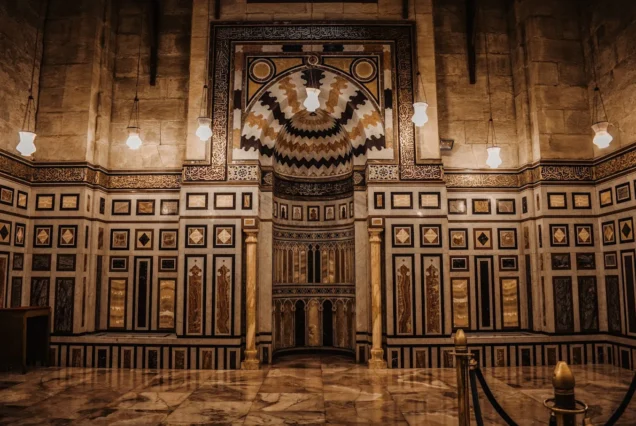
Inside the Citadel, you will visit the breathtaking Mosque of Muhammad Ali.
This mosque is one of the most recognizable landmarks in Cairo, known for its Ottoman-style architecture and grand design.
Key Features
Massive central dome
Twin minarets dominating the skyline
Interior decorated with alabaster stone
Inspired by Istanbul’s Blue Mosque
This site is a highlight of any Cairo Islamic sites tour, offering both spiritual ambiance and architectural beauty.
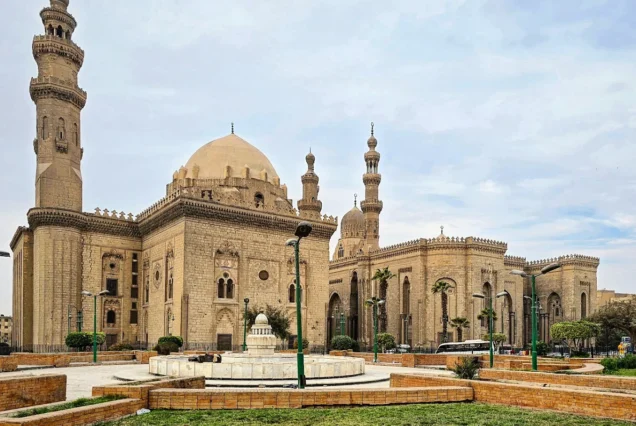
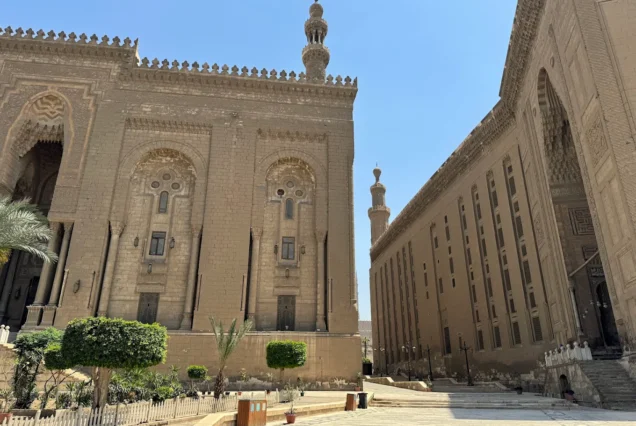
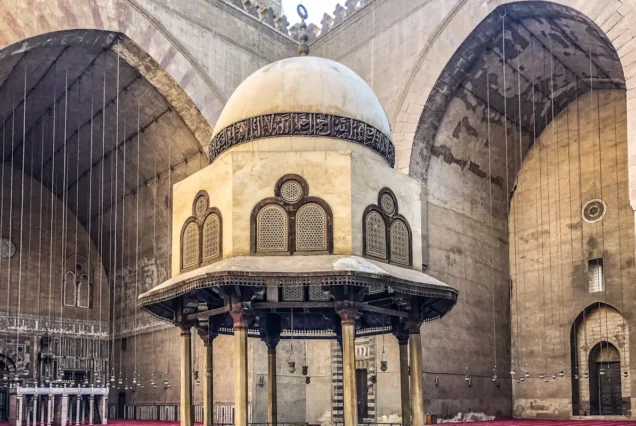
Next, you will explore the magnificent Sultan Hassan Mosque.
Built during the Mamluk era, this mosque is one of the largest and most impressive in the Islamic world.
Architectural Highlights
Four iwans representing Islamic schools
Massive courtyard with marble flooring
Towering entrance gate
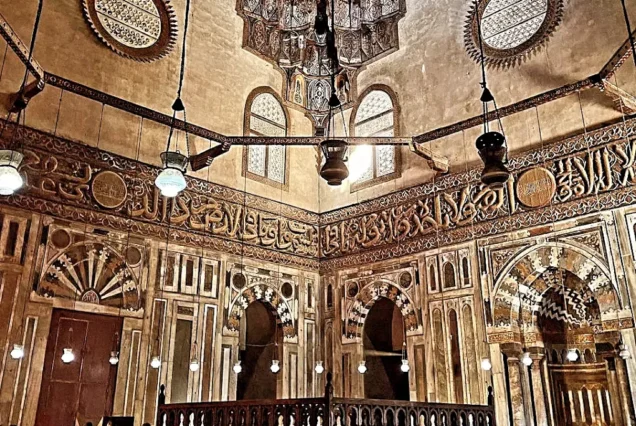
Intricate stone carvings
Despite being built during a time of crisis (the Black Death), the mosque stands as a symbol of resilience and artistic achievement.
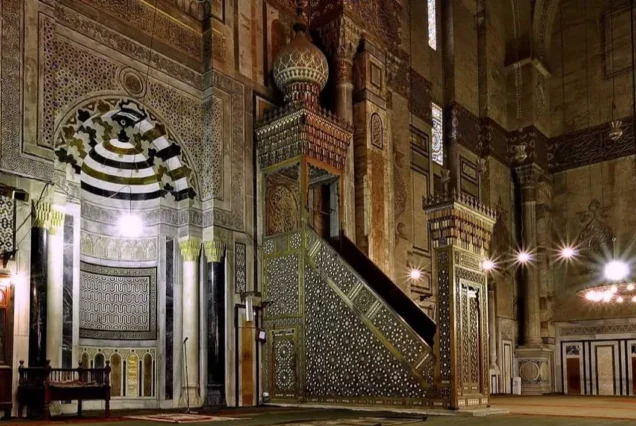
Your next visit is the stunning Al-Rifa'i Mosque.
Located directly opposite Sultan Hassan Mosque, this structure blends traditional and modern Islamic architecture.
Why Visit Al-Rifa’i Mosque?
Burial site of Egyptian royalty
Unique architectural fusion
Rich decorative details
Historical significance
After exploring Cairo’s most iconic Islamic landmarks, enjoy a relaxing lunch at a local restaurant.This is your chance to experience traditional Egyptian flavors and recharge before continuing your journey.
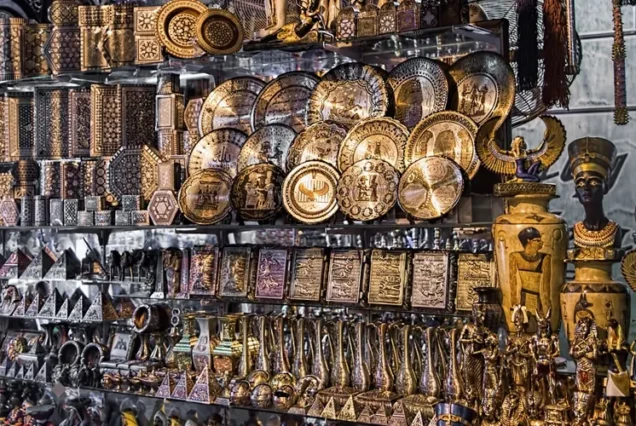
Depending on your preferences, you may explore local markets or artisan shops, discovering handmade crafts, souvenirs, and traditional goods.
After a full day of exploration, you will be transferred back to your hotel in comfort.
Islamic Cairo as a Civilizational Ecosystem, Not a Tourist Stop
Islamic Cairo must be understood not as a collection of monuments, but as a continuous urban organism shaped by power, religion, scholarship, and trade over more than a millennium. The district represents one of the densest concentrations of medieval Islamic architecture in the world, where spatial planning, religious ideology, and political authority intersect.
At the heart of this ecosystem lies the Citadel of Saladin, which functioned not only as a military stronghold but as a centralized command structure for governance, defense, and symbolic authority. Its elevation above Cairo was not accidental—it reflects a deliberate attempt to visually and physically dominate the city.
This vertical dominance mirrors a broader concept in Islamic urbanism: authority must be both visible and accessible, yet elevated and protected.
Power, Plague, and Monumentality – The Political Psychology of Architecture
The construction of the Mosque-Madrassa of Sultan Hassan during the mid-14th century is one of the most powerful examples of architecture used as political messaging.
At a time when Cairo was devastated by the Black Death, this structure emerged as:
A statement of resilience against collapse
A projection of divine legitimacy
A physical manifestation of state-sponsored religious authority
Its monumental scale is not merely aesthetic—it is psychological. The height of its walls, the depth of its iwans, and the controlled entry sequence are designed to diminish the individual and elevate the institution.
This is architecture functioning as ideological reinforcement.
The Ottoman Reinterpretation of Cairo’s Identity
With the rise of Ottoman influence, Cairo underwent a subtle yet significant transformation. The Mosque of Muhammad Ali illustrates this shift clearly.
Unlike the heavy, grounded forms of Mamluk structures, this mosque introduces:
Expansive central domes
Slender minarets
A more fluid spatial experience
This reflects a transition from fortified religiosity to imperial elegance, aligning Cairo visually with the broader Ottoman world, particularly Istanbul.
However, this was not merely aesthetic imitation—it was a political statement of alignment and modernization under Muhammad Ali Pasha.
Duality and Dialogue – The Relationship Between Sultan Hassan and Al-Rifa’i
Few locations in the world present such a direct architectural dialogue as the spatial relationship between the Mosque-Madrassa of Sultan Hassan and the Al-Rifa'i Mosque.
Standing face-to-face, these two structures represent:
Medieval Mamluk power (Sultan Hassan)
Modern royal identity and continuity (Al-Rifa’i)
This pairing creates a temporal bridge across centuries, where visitors can visually and physically experience the evolution of Egyptian Islamic identity.
The Al-Rifa’i Mosque also serves as a royal necropolis, adding a layer of dynastic narrative that transforms the site from a place of worship into a repository of national memory.
Urban Fabric, Movement, and Human Experience
Islamic Cairo is not designed for vehicles—it is designed for human movement, sensory engagement, and social interaction.
The narrow streets, shifting perspectives, and sudden openings into courtyards create a dynamic spatial rhythm. This urban pattern serves multiple purposes:
Climate control through shaded pathways
Social interaction through compressed spaces
Commercial activity through integrated markets
Visitors are not just observing history—they are participating in a centuries-old urban choreography.
Symbolism Beyond Decoration – A Language of Geometry and Light
Islamic architecture in Cairo operates through a non-figurative symbolic system where meaning is conveyed through:
Repetition
Symmetry
Infinite geometric progression
Inside the Mosque of Muhammad Ali, light is filtered through layered openings, creating a spiritual gradient from exterior chaos to interior calm.
This manipulation of light is not incidental—it is a metaphysical tool, guiding the visitor toward contemplation and inner stillness.
The Economic Engine Behind the Monuments
Every major monument in Islamic Cairo was supported by a waqf system (endowment)—a sophisticated financial mechanism that ensured:
Maintenance of religious institutions
Funding of education
Support for social services
This means that mosques were not isolated buildings—they were economic hubs embedded within a sustainable urban system.
Understanding this transforms the tour from visual appreciation to economic and social analysis.
Islamic Cairo as a UNESCO-Recognized Global Treasure
Islamic Cairo is recognized as part of a UNESCO World Heritage listing, highlighting its universal value.
This designation is not merely honorary—it reflects:
Architectural uniqueness
Historical continuity
Cultural significance
For travelers, this means they are engaging with a site that holds global importance beyond national identity.
This tour focuses on interpretation, not just visitation. You are not simply seeing monuments—you are understanding their political, cultural, and architectural context.
Moderate walking is required. The experience is designed to balance comfort with immersive exploration, including rest points and flexible pacing.
No. The tour is structured to provide layered explanations, making it accessible for beginners while still valuable for advanced travelers.
Yes, it integrates seamlessly with broader itineraries including Giza, Saqqara, and museum visits.
Cultural travelers
History enthusiasts
Architecture lovers
Academic and educational groups
Yes, completely safe with a professional guide.
Yes, it is family-friendly and for all ages,especially for educational purposes
Yes, with additional cost.
Moderate walking
Yes, lunch is included at a local restaurant.
Most areas allow photography, but restrictions may apply in specific interiors. Your guide will provide real-time guidance.
Cairo traffic can be unpredictable, but маршруtes are strategically planned to optimize time efficiency.
Depending on timing, guides may introduce lesser-known architectural details and viewpoints not typically included in standard itineraries.
Guides are trained in Egyptology, Islamic history, and cultural interpretation, ensuring a high-level experience.
Yes. The experience is designed to meet premium travel standards, including private transport and personalized service.
Understanding the Environment Before You Arrive
Islamic Cairo is a dense, high-context environment. Preparation enhances your experience significantly.
Key considerations:
Expect layered sensory input (sound, movement, architecture)
Be prepared for active urban life
Embrace flexibility
Optimal Timing Strategy
Early morning: best for clarity and temperature
Midday: ideal for interior visits
Late afternoon: best for atmospheric photography
Clothing Strategy for Comfort and Cultural Alignment
Lightweight, breathable fabrics
Covered shoulders and knees
Walking shoes with strong grip
This is not only respectful—it enhances your mobility and comfort.
Maximizing Your Cultural Engagement
To go beyond surface tourism:
Ask analytical questions
Observe patterns, not just structures
Compare architectural styles across sites
Photography as Documentation, Not Just Memory
Approach photography as a tool for storytelling:
Capture transitions between spaces
Focus on scale and human interaction
Use light contrasts to highlight structure
Navigating Social Interactions
Islamic Cairo is socially active. Visitors should:
Maintain respectful body language
Engage politely with locals
Avoid intrusive behavior
Health and Energy Management
Hydrate consistently
Take short breaks
Avoid overexertion in peak heat
Security Awareness Without Anxiety
The area is generally safe, but:
Stay with your guide
Avoid isolated areas
Keep valuables secure
Interpretive Excellence Over Basic Guiding
Luxury Shuttle prioritizes deep interpretation, transforming each stop into a meaningful narrative rather than a checklist item.
Operational Precision and Time Optimization
Every element of the tour is engineered for:
Maximum site coverage
Minimal wasted time
Smooth transitions between locations
High-End Transportation Standards
Modern air-conditioned vehicles
Professional drivers trained for Cairo conditions
Seamless pickup and drop-off logistics
Adaptive Itinerary Design
Unlike rigid tour operators, Luxury Shuttle offers:
Real-time adjustments
Personalized pacing
Flexible route optimization
Cultural Intelligence and Local Insight
Guides provide access to:
Hidden architectural meanings
Historical debates and interpretations
Contextual storytelling beyond guidebooks
Client-Centric Experience Model
Every decision is based on:
Comfort
Engagement
Long-term memory creation
Trust, Transparency, and Reputation
Luxury Shuttle operates with:
Clear pricing structures
No hidden costs
Consistent service quality
Scalable for All Travel Styles
Whether you are:
A solo traveler
A family
A luxury client
A researcher
The experience adapts to your needs.
A Long-Term Value Experience
This is not just a tour—it is an educational and emotional investment that enhances your understanding of Cairo and Islamic civilization.
Step into the heart of Islamic Cairo and experience a journey through over 1,000 years of history, architecture, and living culture.
Book your private guided tour today and explore the legendary Citadel, breathtaking mosques, and the timeless streets of Old Cairo with expert storytelling and premium comfort.








Reviews
There are no reviews yet.